Table of Contents
Dual Data Services: Overview
 Updated
by Jennifer Trower
Read Time: 4 mins
The Dual Data Services feature provides the capability to associate two distinct data services with a single customer account, clearly identifying primary and additional services. This enhancement facilitates better service management, scheduling, and invoicing without impacting subscriber-facing terminology.
Prerequisites
Before using this feature, you must first enable the Dual Data Services feature in your Sonar instance. Without enabling this, no additional functionalities described in this article will appear. Ensure this feature is enabled in your system settings before proceeding.
Permissions
Before getting started with the feature, your user roles will need to be adjusted to account for the minimal permissions required to use the Dual Data Services feature.
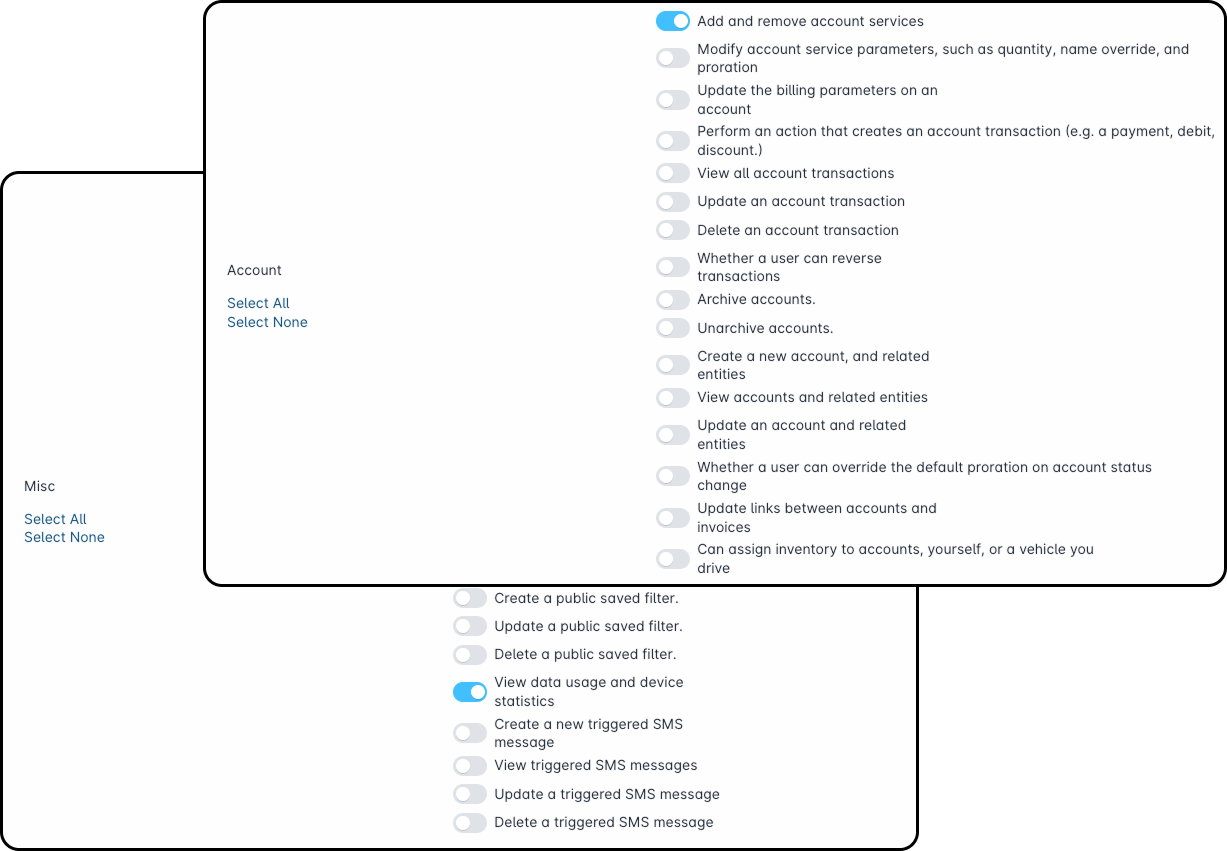
To enable the feature, you will require the following permission:

To use the feature, you will require the following permissions:
Enabling Dual Data Services
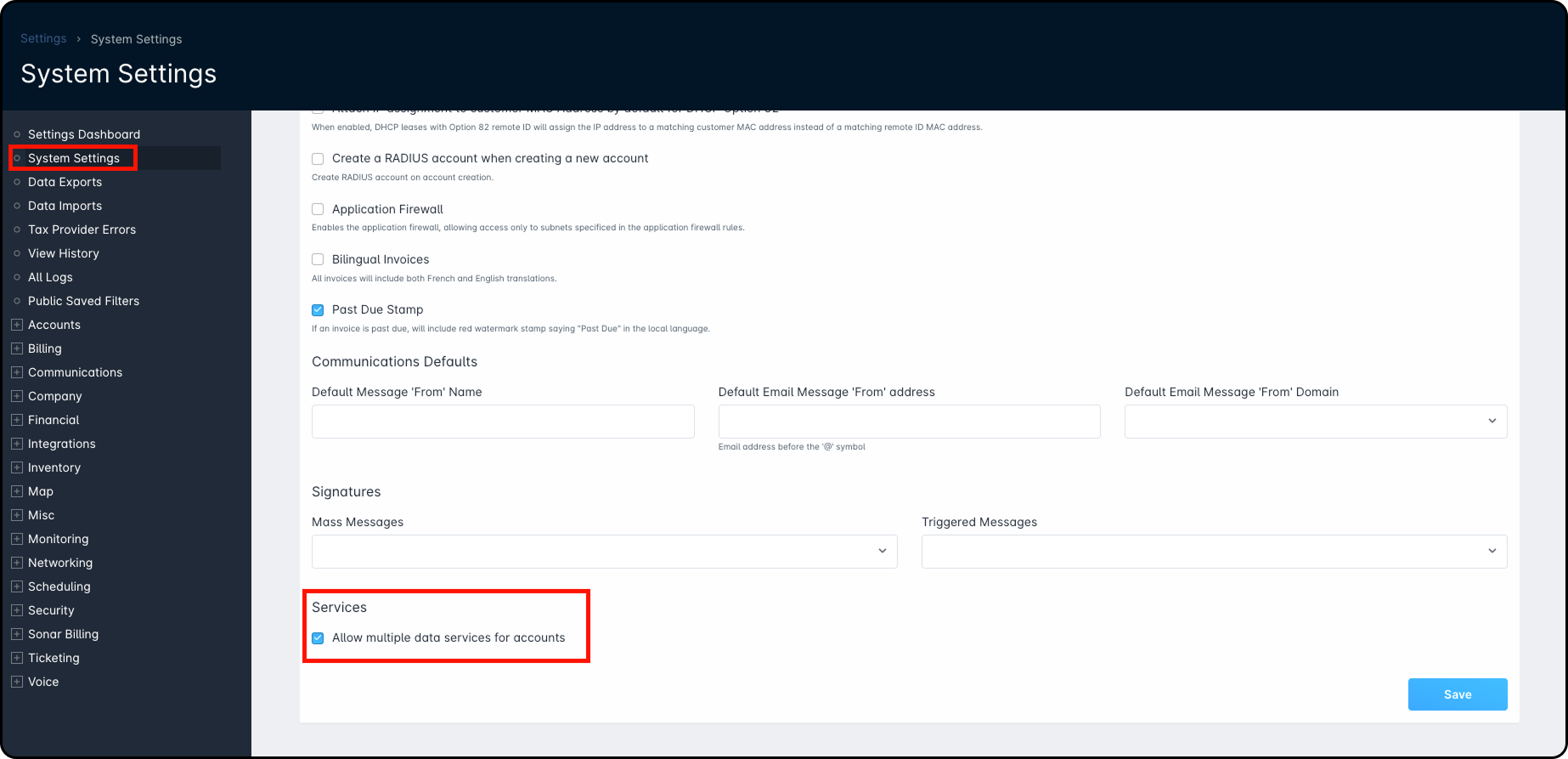
To enable the feature, you will navigate to Settings -> System Settings. Scroll to the bottom of the page and click the check box under “Services” labeled Allow multiple data services for accounts.
Adding a Secondary Data Service
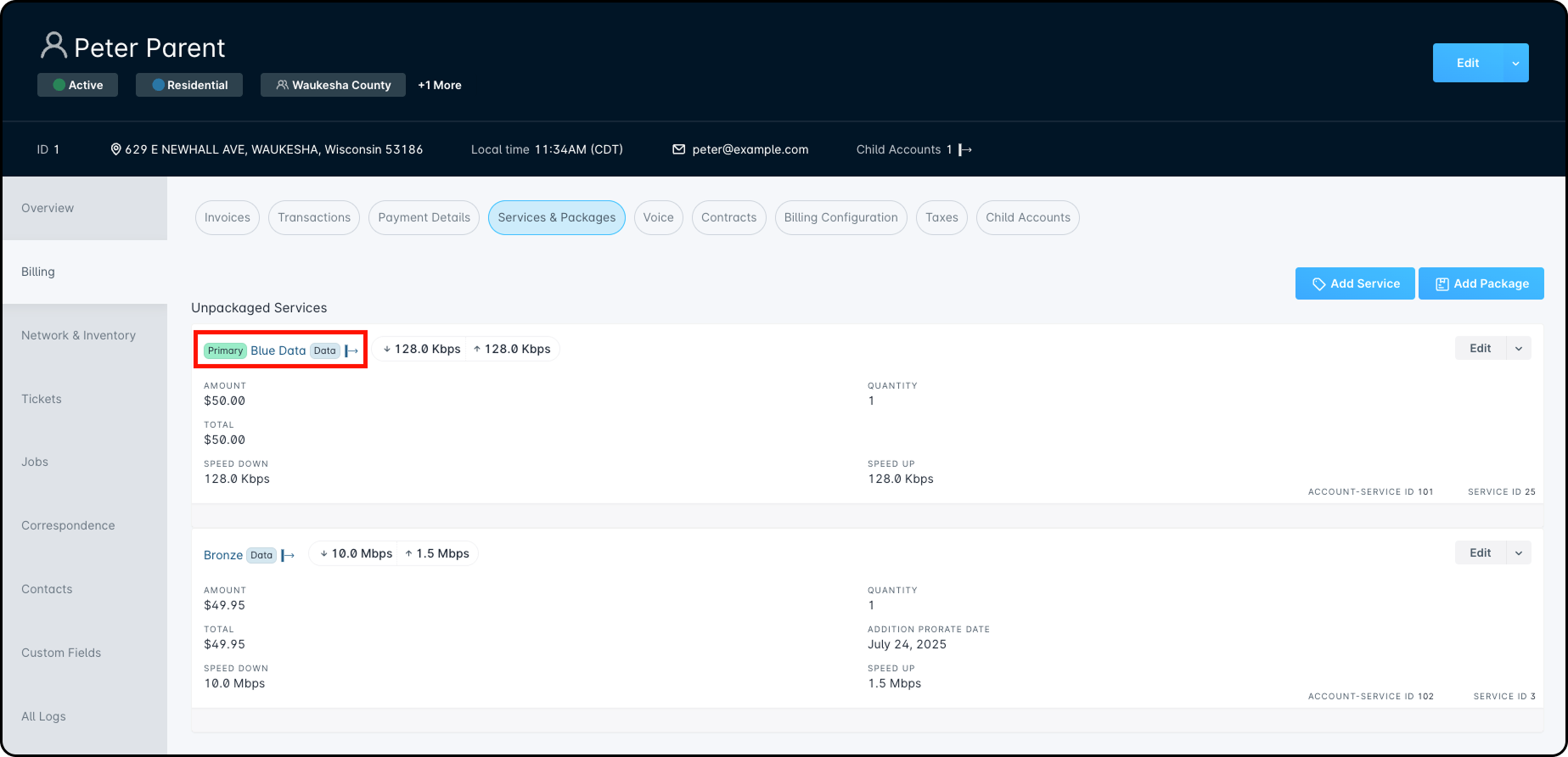
After enabling the feature, navigate to the customer's account, click Billing, select Services & Packages, and then click the Add Service button to add another data service.
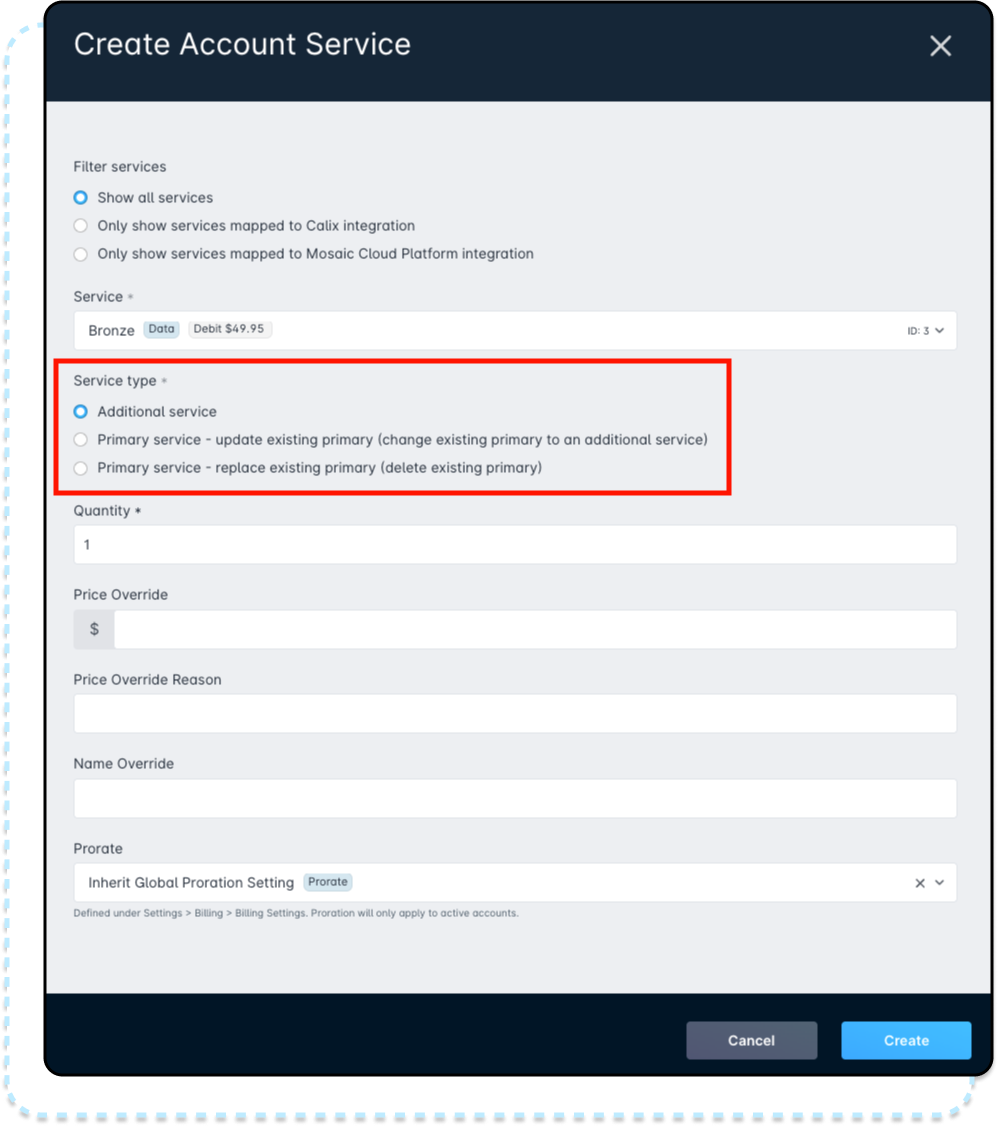
When adding a new data service, you'll see a section called “Service type” where you can choose how the service is added:
- Additional service: Adds as an extra service alongside the primary service.
- Primary service - update existing primary: Sets the new service as primary, moving the current primary service to additional.
- Primary service - replace existing primary: Replaces the current primary service entirely, leaving only the new service.
After choosing your option, click Create. Your services will now clearly show which is primary and which is additional.
Adding a Package
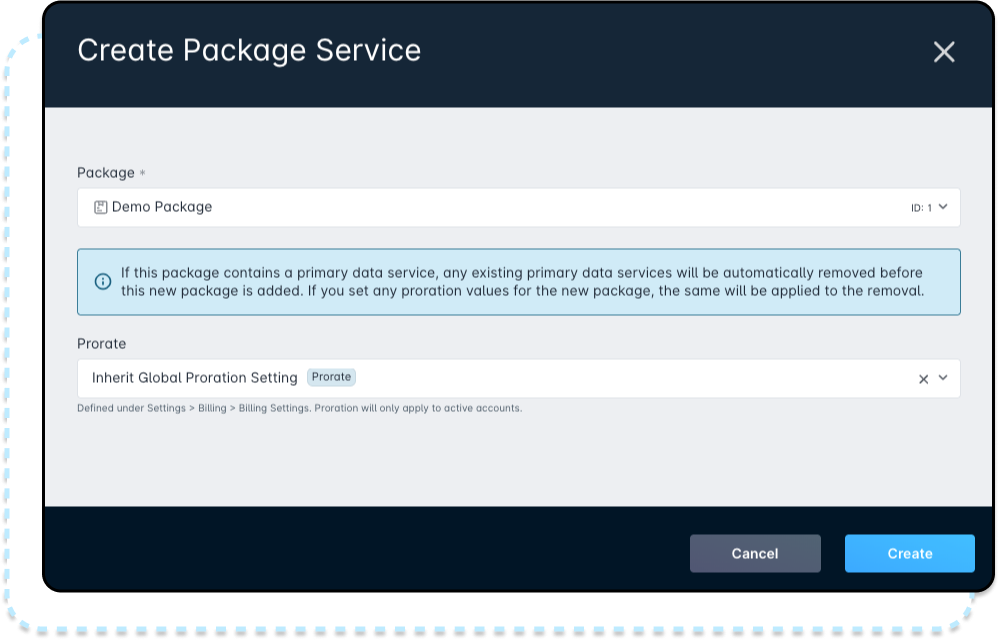
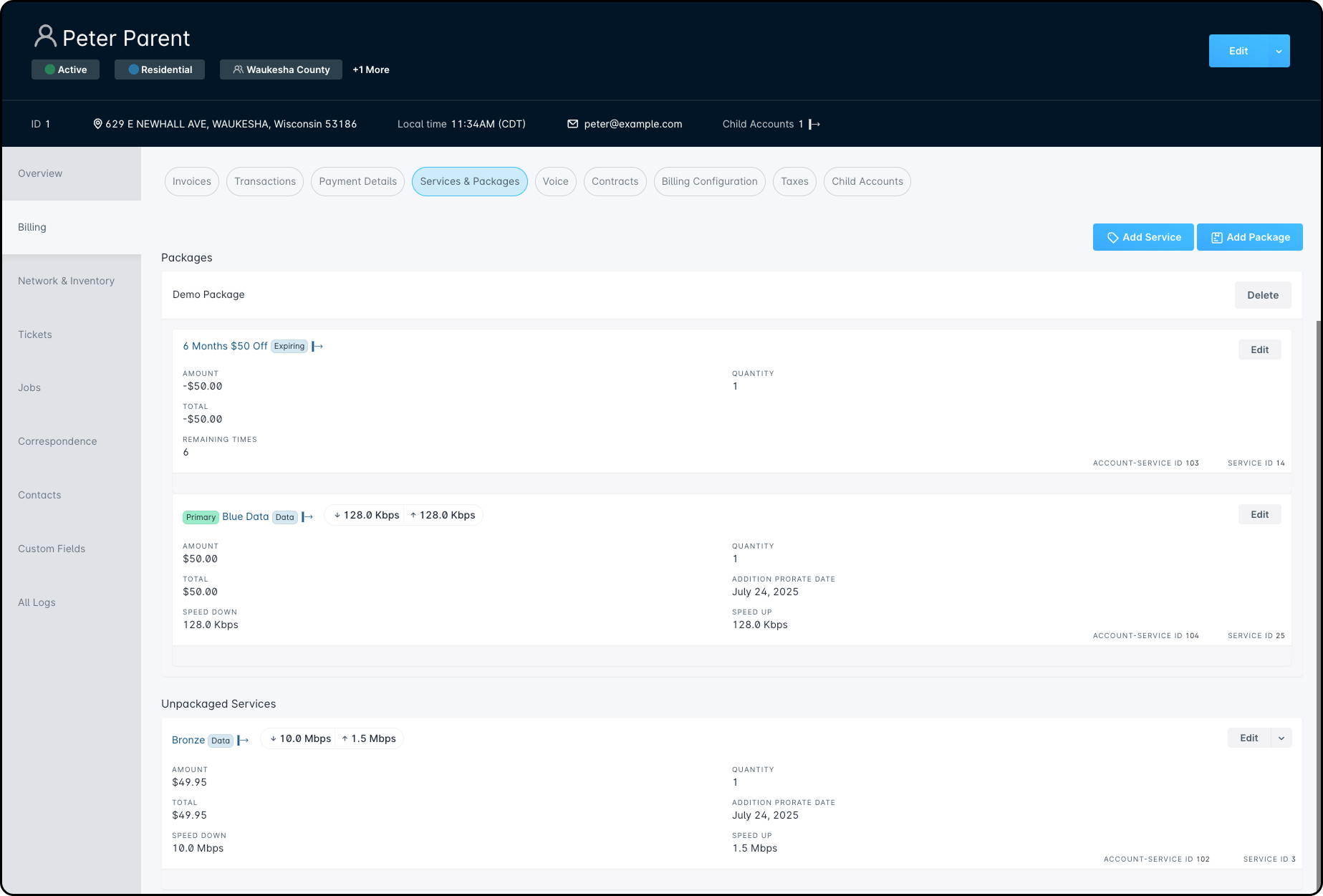
Adding a package works just like adding a data service, but keep in mind that any data service included in a package will always be set as the main (primary) data service.
Visual Changes with Dual Data Services
When you add another data service, you'll notice some updates in your Sonar interface, making it easy to keep track of each service separately.
Account Overview Page
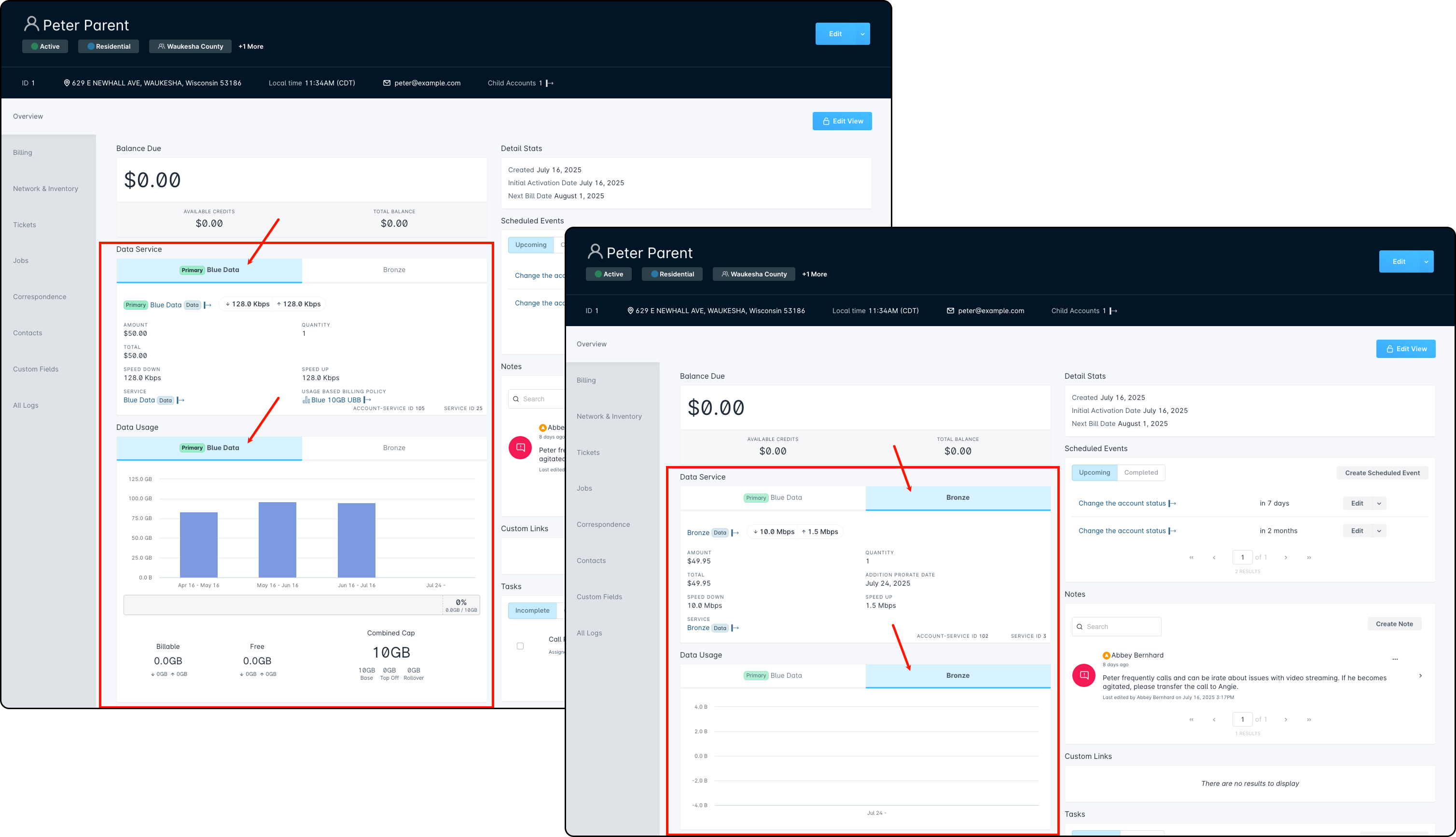
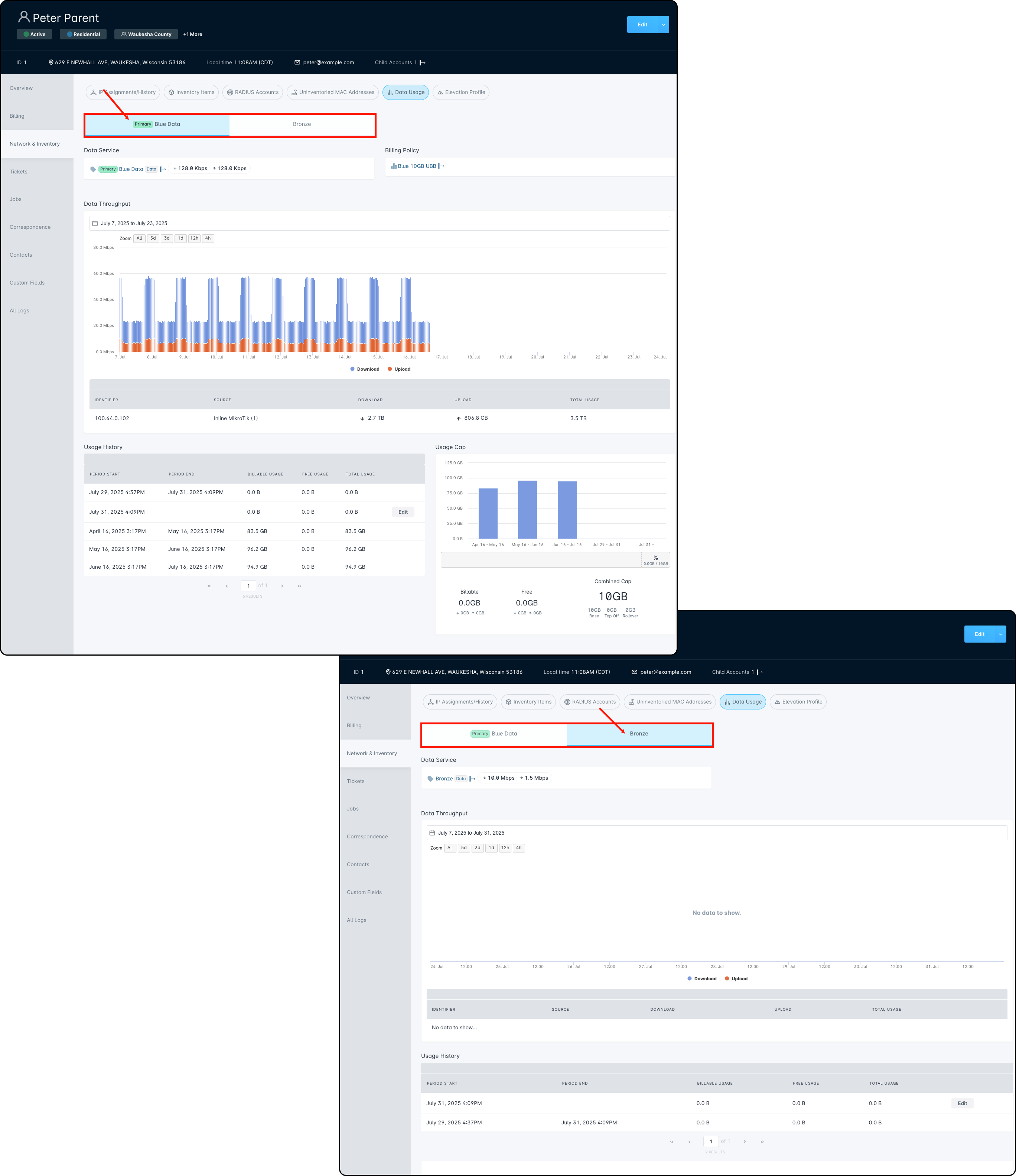
A new tab will appear next to your existing data service, clearly showing the usage and billing details for the additional service.
Billing
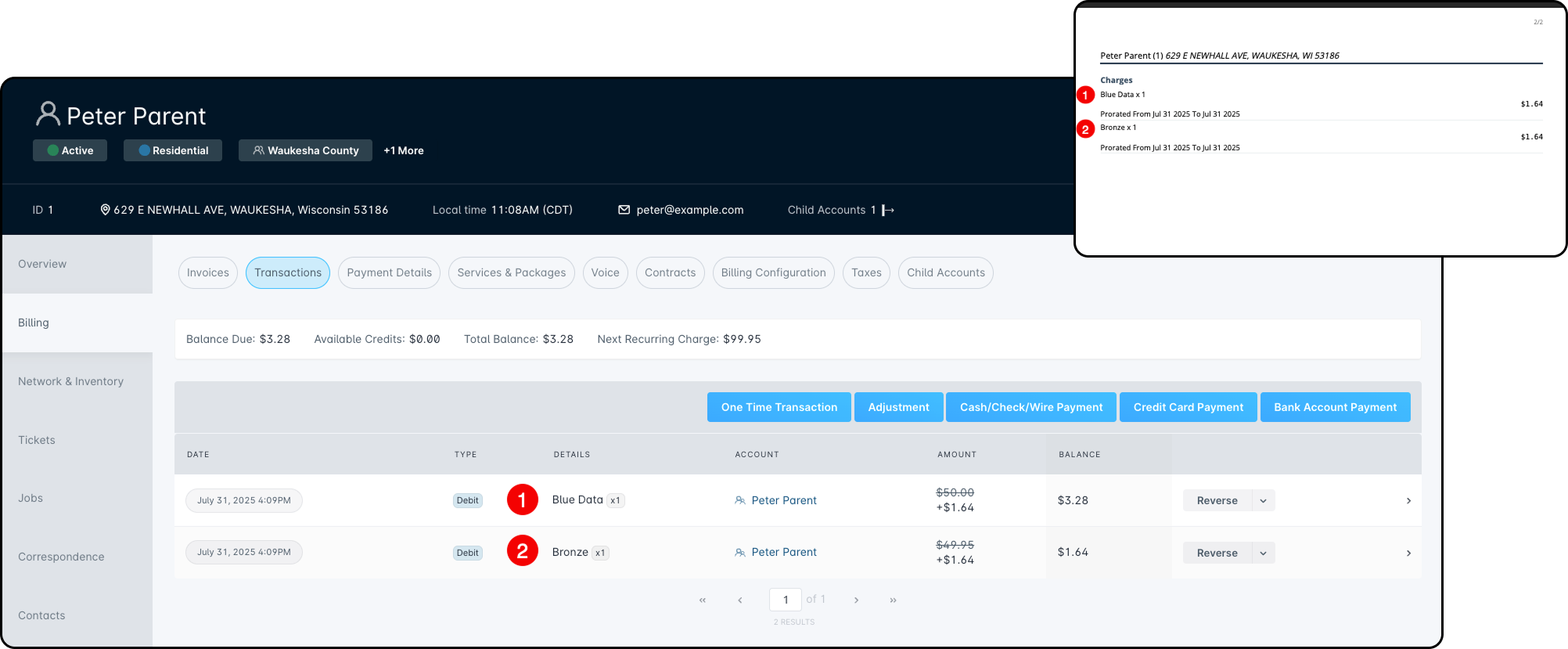
Within the Billing section, each service will appear separately on customer invoices and the Transactions page, without labels like “primary” or “additional,” to keep things simple and clear.
Data Usage Tab
Each data service has its own separate data usage tracking, making it easy to monitor how much data is used per service.
Scheduled Events
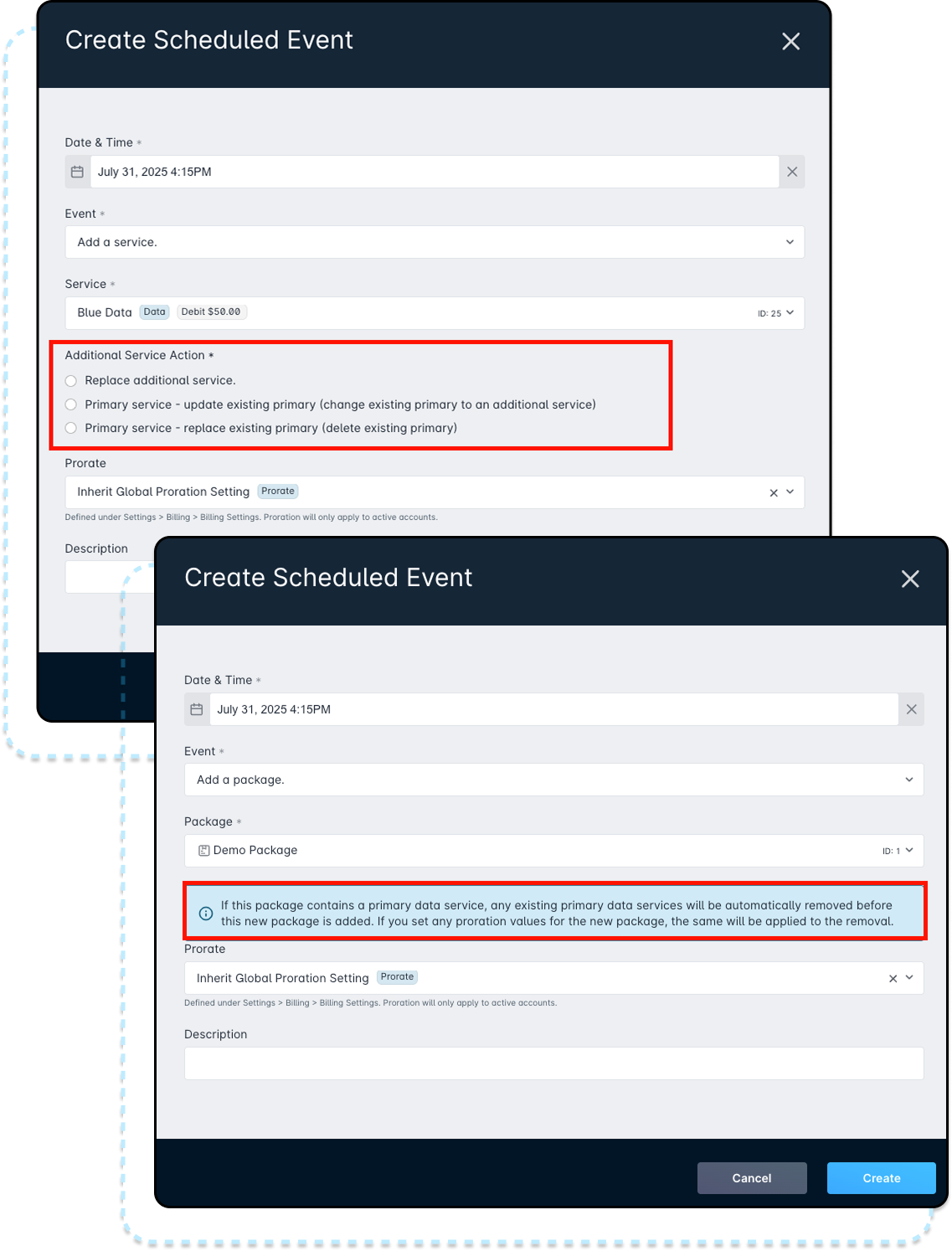
Scheduled events clearly show when actions apply to the additional service, so you can easily keep track.
Customer Portal
The Customer Portal reflects dual data services in a clear way:
- FCC Labels: If your FCC labels are set up correctly, the portal will show a separate label for each data service.
- Invoices: Services are listed individually on customer invoices without labels like “primary” or “additional,” keeping invoices simple.
Adding Data Services to a Job Type
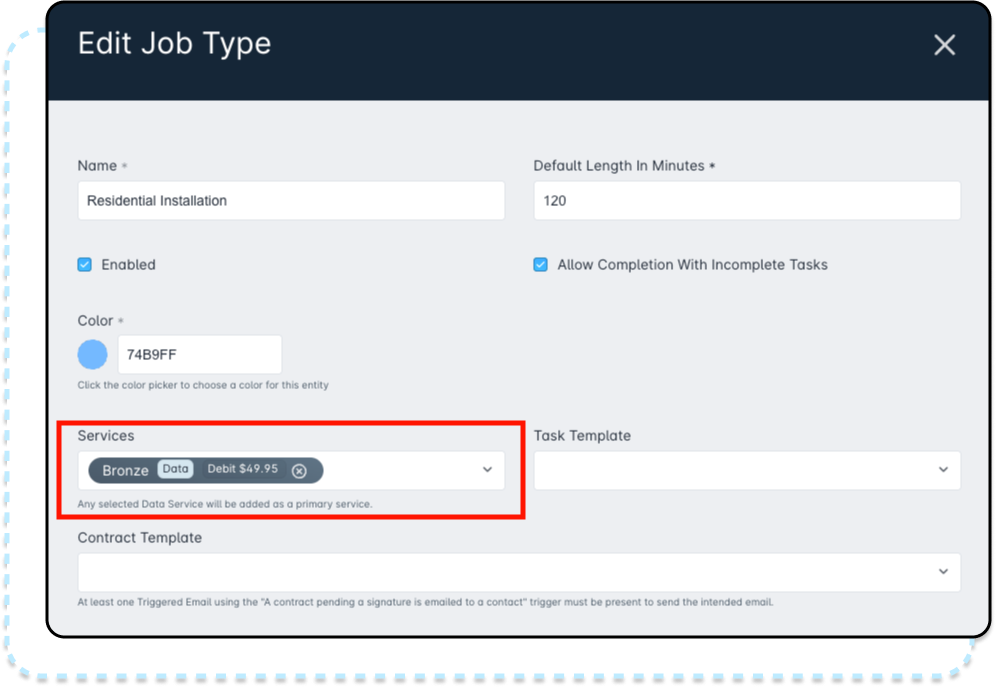
When adding data services to a Job Type, any new data service included will always be set as a primary data service. Job Types won't add another (secondary) service, only primary services. This is accompanied by helper text in Sonar, clearly indicating this behavior to prevent confusion or mistakes.
Communications: Canned Replies & Triggered Messages
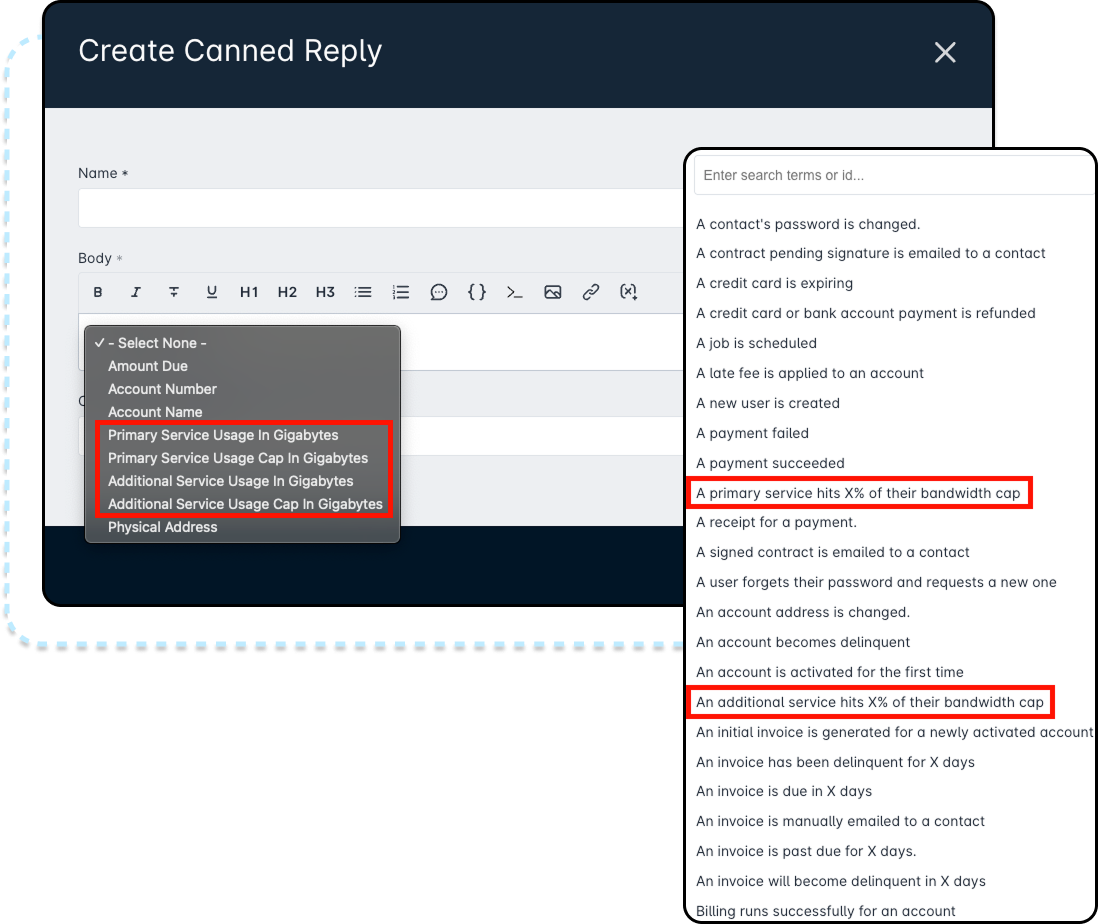
Triggered messages have been updated to clearly differentiate between primary and additional data services. This means the triggered message options and Canned Replies variables now reflect the distinction, ensuring clear communication about which specific service the message pertains to.
Inventory and Network Management
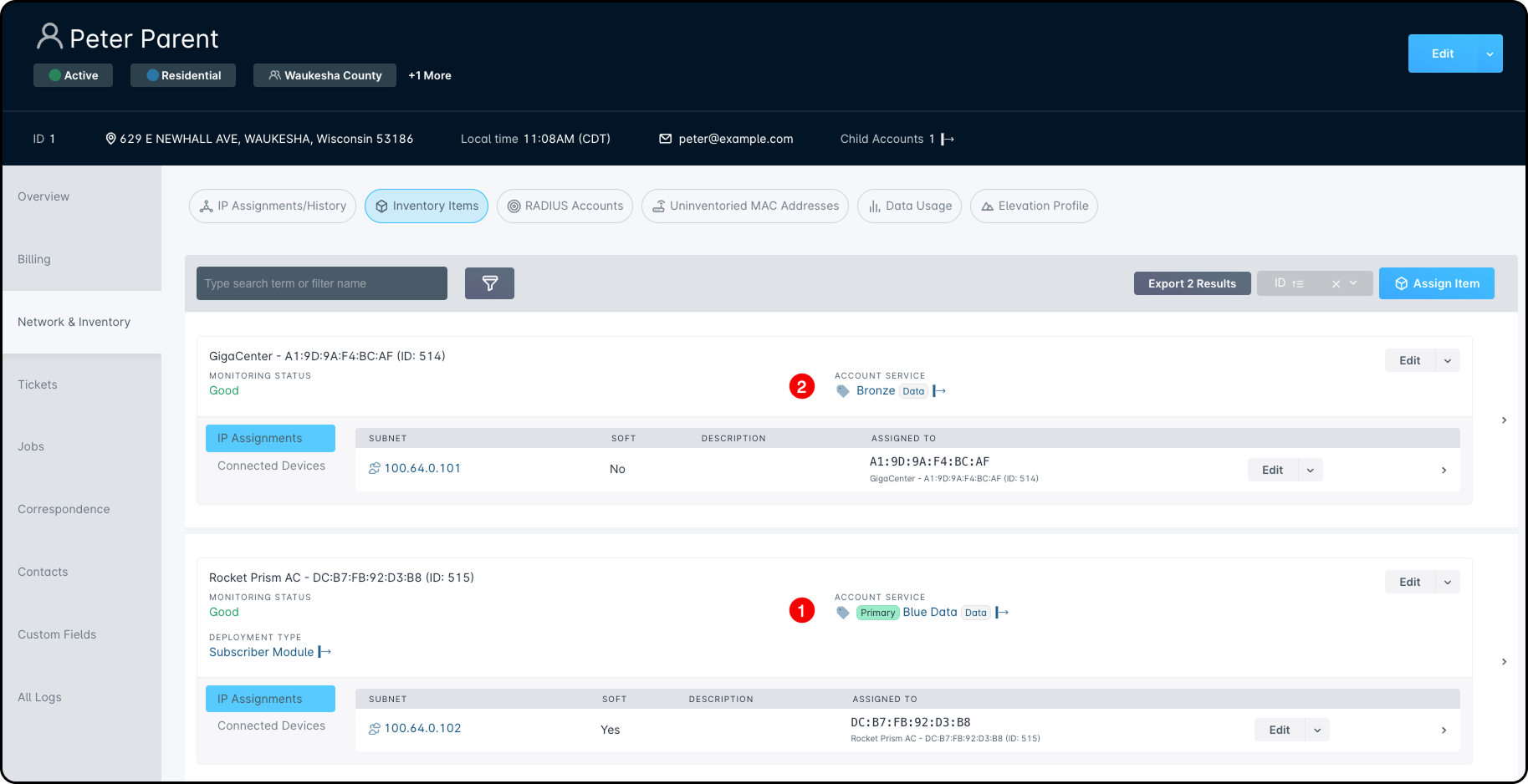
You can now link inventory items, IP addresses, Radius accounts, and uninventoried MAC addresses directly to the specific data service they're associated with—whether it's a primary or additional service—making your inventory and network management clearer and easier.